The Manakula Vinayagar Temple, situated in the Indian Union Territory of Puducherry, stands as a revered Hindu shrine dedicated to the deity Ganesha. It holds significant historical importance, having been established long before the French colonization of the region. Today, it remains a cherished destination for both pilgrims and tourists alike, drawing visitors to its sacred grounds and cultural significance in Puducherry.
Table of Contents
The temple is a renowned pilgrimage site and a prominent cultural landmark in the region. It is dedicated to Lord Ganesa, the elephant-headed deity who represents wisdom and prosperity. This tradition holds deep roots in local customs and spiritual practices.
The serene architecture and tranquil surroundings of the temple provide a haven for worshippers and visitors alike. Vibrant rituals, including daily prayers, offerings, and joyous celebrations, attract devotees seeking blessings, guidance, and fulfillment in various aspects of life.
The Manakula Vinayagar Temple stands as a testament to the area’s deep religious heritage and remains a hub of devotion, reflection, and cultural importance. Individuals flock to this sacred site with faith, seeking blessings, solutions to their troubles, and opportunities to honor Lord Ganesha.
History
The Arulmigu Manakula Vinayagar Temple, with a history spanning over 500 years, holds two captivating tales. One recounts a moment during French colonial rule in 1688 when the French constructed a fort adjacent to the temple. They attempted to relocate the Vinayagar Temple by casting its idol into the sea, yet each time, the idol miraculously returned to shore. Witnessing this, the French abandoned their efforts and embraced devotion to Lord Ganesha.
Another ancient legend tells of a saint, adorned with radiant eyes and a broad forehead, who attained samadhi at this sacred site around 300 years ago. Since then, it has been revered as an auspicious place for newborns.
The Manakula Vinayagar Koil stands as one of Pondicherry’s oldest and most revered Hindu temples, cherished for its rich history and spiritual significance.
Architecture and designings
The temple is adorned with intricate statues depicting gods, goddesses, and various mythological beings. It boasts several towering entry towers, known as gopurams, which stand as iconic symbols of its impressive architectural design. These gopurams, adorned with exquisite sculptures narrating mythological stories and honoring deities, exemplify the temple’s strong adherence to the Dravidian architectural style.
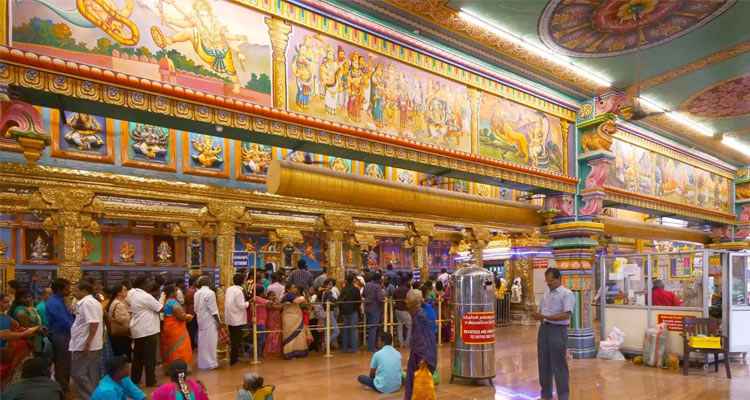
Within the temple lies a majestic hall known as the “mandapam,” adorned with intricately carved pillars showcasing extraordinary craftsmanship. These pillars depict legendary narratives and intricate designs, contributing to the temple’s renowned beauty. Throughout the temple walls, pillars, and ceilings, visitors are captivated by the stunning stone carvings depicting scenes from Hindu mythology, ranging from the epic tales of the Ramayana and Mahabharata to the life stories of various deities.
The temple’s unique attraction is the golden chariot, reserved for special processions and festivals, designed to carry the deity. Elaborately adorned with intricate artwork, it stands as a symbol of splendor. Traditional building materials like granite and lime mortar are meticulously employed, enhancing the temple’s durability and facilitating its upkeep.
Experience the serene tranquility and spiritual rejuvenation at Sri Manakula Vinayagar Temple in Pondicherry. The temple’s intricate design and sculptures have left a profound impact on local art and handicrafts. The centuries-old skills and techniques employed in carving its beautiful sculptures have been preserved through generations. A visit to this magnificent temple promises not only a visually cooling ambiance but also a deeply uplifting spiritual experience.
Specials
The temple derives its name from a combination of Tamil words: “Manal,” signifying “sand,” and “Kulam,” referring to a “pond near the sea.” Formerly known as Manal Kulathu Vinayagar, this sacred site is renowned for hosting various festivals and events annually. Among these, the most prominent is Brahmothsavam, a grand celebration spanning 24 days.
Although night sanctuaries for Vinayaka are uncommon in temples, one exception is found at the Manakula Vinayagar temple. Here, Vinayaka is worshipped alongside his retinue. The temple houses a unique idol known as Palliarai, consisting only of the foot section. Notably, there exists a concealed feature called the Well of Vinayaka: a platform for the deity situated within a well or tank, often overlooked by visitors. Adjacent to this platform, there is a mysterious six-inch radius hole on the left side whose depth remains unknown, yet it is consistently filled.
Many residents of Puducherry flock to this temple to seek blessings on the first day of the new year, believing it will ensure prosperity in the coming year. They patiently wait in long queues to worship Lord Ganesha. This tradition holds significance not only on January 1st but also during the Brahmothsavam festival, celebrated from August to September, which draws devotees from across generations. This festival is a cherished cultural event, deeply rooted in the hearts of worshippers.
The blessings bestowed by the elephant at this temple hold immense significance for the locals of Puducherry. They eagerly seek the blessings from the elephant’s trunk, believing it to be a direct bestowal from Lord Ganesha himself. The elephant’s blessings are deeply cherished by all who visit the temple, symbolizing a special connection to their hearts. The priests of this temple celebrate the grand Vinayak Chaturthi festival with great fervor and devotion.
Explore More: Basilica of the sacred heart of jesus in Pondicherry.
Location
Conclusion
Exploring the Manakula Vinayagar Temple offers a profound understanding of the diverse traditions and customs of the region, drawing worshippers from various backgrounds who come together to offer prayers and seek blessings from Lord Ganesha. With its roots intertwined with Puducherry’s colonial history, the temple serves as a symbol of the cultural amalgamation that has evolved over the years. Beyond its religious significance, the temple embodies the spiritual, cultural, and historical essence of Puducherry, consistently attracting worshippers, tourists, and individuals in search of inner tranquility.
Related